Hair & Rasayana · 7 min read
Bhringraj — the Ayurvedic herb of hair and rejuvenation
A plain-language introduction to Bhringraj (Eclipta prostrata; syn. Eclipta alba): its botanical identity, its place in the Ayurvedic hair-care and Rasayana tradition, the forms it is prepared in, and what published research does and does not show.
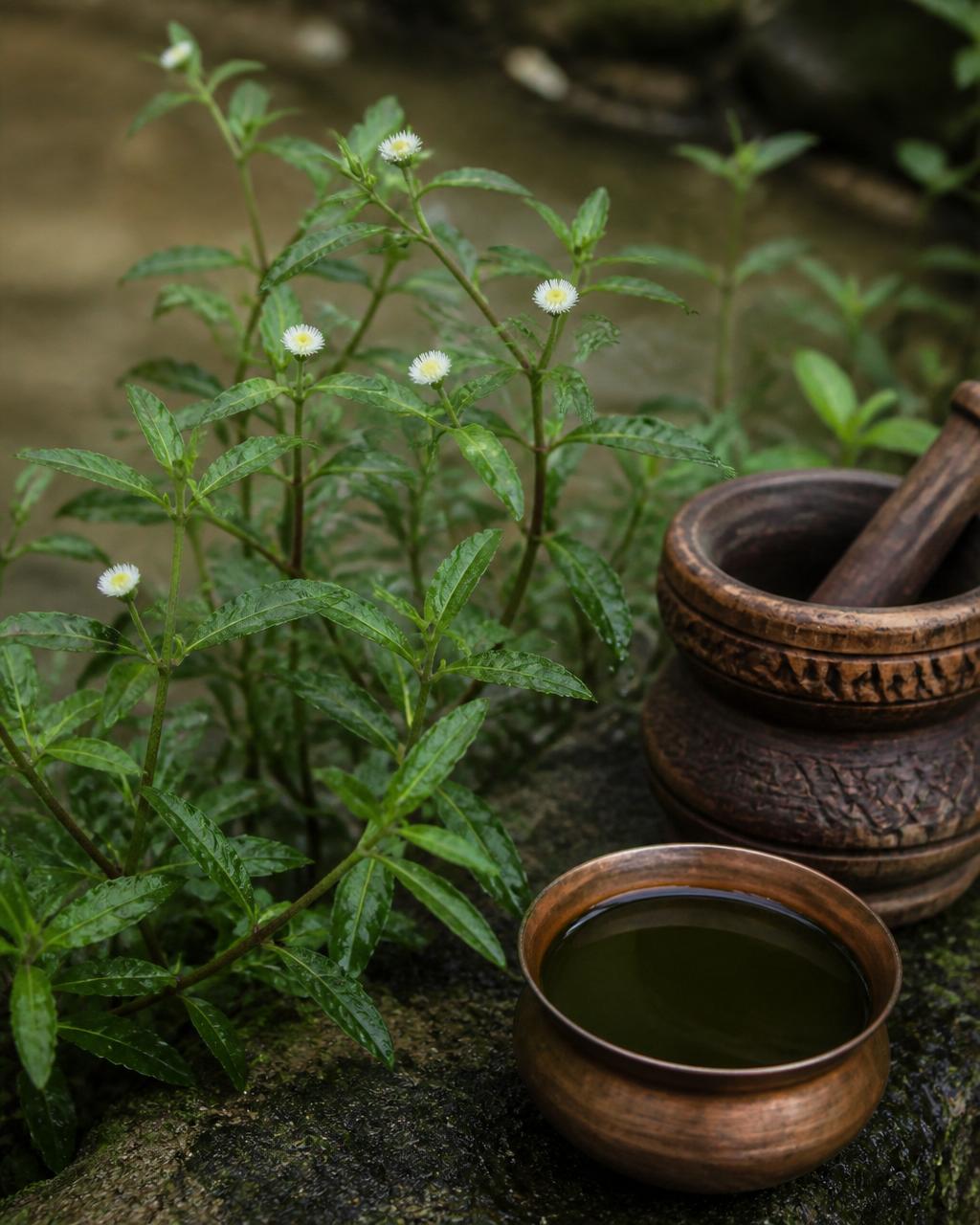
One plant, two names
Bhringraj is a small, spreading herb of damp ground, ditch edges and field margins, with opposite lance-shaped leaves and small white flower heads that give it the English name false daisy. Its accepted botanical name today is Eclipta prostrata (L.) L. The older name Eclipta alba (L.) Hassk. remains in wide use across Ayurvedic and pharmacognostic literature and refers to the same plant. Where a supplier lists either name, the herb intended is the same one.
The hair tradition — and what it means
In the Ayurvedic textual tradition Bhringraj is closely associated with hair and scalp care; the Sanskrit epithet Kesharaja reflects that association, and classical medicated oils carrying its name are applied externally rather than taken internally. This is a traditional description, not a clinical claim. It tells you how the herb has been used and understood, not that it will produce a particular result for a particular person.
Rasayana context
Ayurveda also places Bhringraj within the Rasayana group — preparations used over a sustained period for restorative purposes, under practitioner guidance rather than as a self-directed course. Classical practice treats suitability as individual: constitution, current state, season, and anything else already being taken all bear on whether a herb is appropriate.
The forms it is prepared in
Three traditional forms recur. Fresh juice (swarasa) from the whole plant; dried powder (churna); and medicated oil (taila) prepared with Bhringraj for external application. Chakrapani Ayurveda dispenses the herb as Bhringaraj Oil, Bhringraj Capsule, and a single-herb Bhringraj powder. Directions, pack sizes and warnings are those printed on each product label and published on the product page.
What the published research shows
Most of the modern literature located for this herb is preclinical — laboratory or animal work examining hair-growth activity, hepatoprotective activity and antioxidant behaviour of extracts. Preclinical findings describe what happened in a model system. They are not evidence of a benefit in people, and they should not be read as a reason to substitute a herbal preparation for prescribed treatment.
Before you begin
Do not stop or change prescribed medication on the basis of a website. If you are pregnant, breastfeeding, considering a herb for a child, or taking prescribed medicine, speak with a qualified practitioner first. If you are unsure which form of Bhringraj to consider, a Chakrapani Vaidya can advise on selection and suitability.